Indigenous Hong Kong Veterans and Brookside Cemetery's Military Field of Honour
November 6, 2026
Written by Pamela Heinrichs
I am a citizen of the Manitoba Metis Federation.
Red River Metis people often introduce ourselves by family name and place to situate ourselves within the Nation. My Red River Metis families include Poitras, Champagne, Fisher, and Grant. They settled in what is now Winnipeg’s St. Vital area around the 1850s and remained there until WWII dispersed the family. I also have British and Belgian ancestry through my mother and grandmothers. As I am going to be talking about the Hong Kong Veterans, and notably the Indigenous Hong Kong Veterans, in their honour I am wearing my Metis sash, my beaded poppy, and my beaded Hong Kong Veterans symbol.
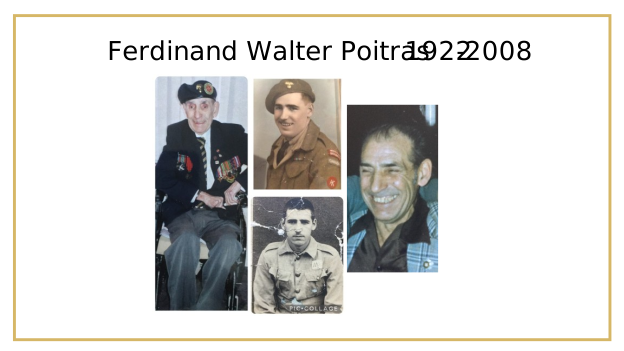
How many of you know of Canada’s role in the Battle of Hong Kong during WWII? Most people do not. I know about it because my father was one of the Canadians known as Hong Kong veterans. I am neither a historian nor a researcher, but present this information to you as the daughter of one of those veterans.
A few years ago, with funding from the Metis Veterans Legacy Program, the Hong Kong Veterans Commemorative Association, which I am part of, undertook a project and researched members of the two regiments sent to Hong Kong in WWII - the Winnipeg Grenadiers and Royal Rifles of Quebec - to identify those of Indigenous ancestry—information not recorded at enlistment, particularly with respect to Metis individuals. About 150 soldiers of Indigenous ancestry were identified. I give an approximate number as some remain under review. Of 131 confirmed, 126 are of Red River Metis ancestry, including my father. The remainder are First Nations. The findings are available on the Association’s very extensive website.
Before linking into the presentation’s title, some context is needed. My information comes from publications, the website, museum visits, and, most importantly, the Hong Kong Veterans themselves—including my father and his friends.
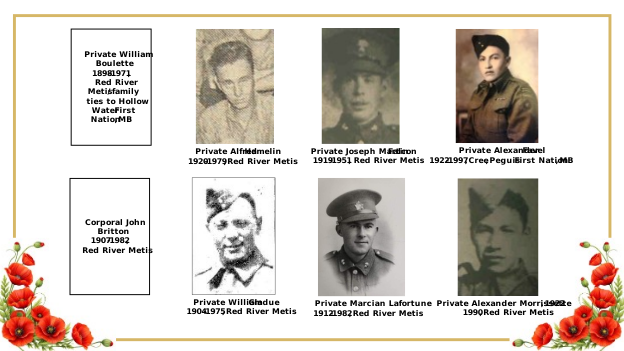
The story I am going to tell here today applies to each and every soldier sent to Hong Kong, including these 14 Indigenous Hong Kong veterans that are buried in Brookside Cemetery. Let me introduce you to them -
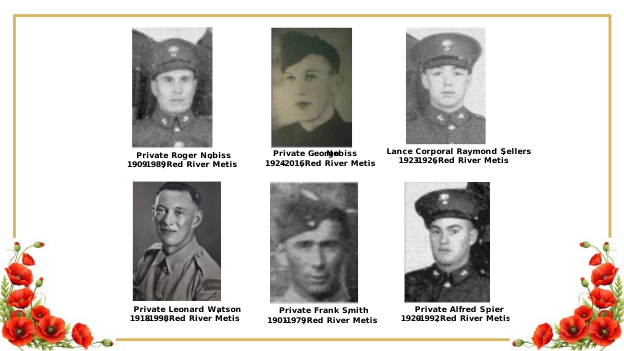
Everything here is their story too.
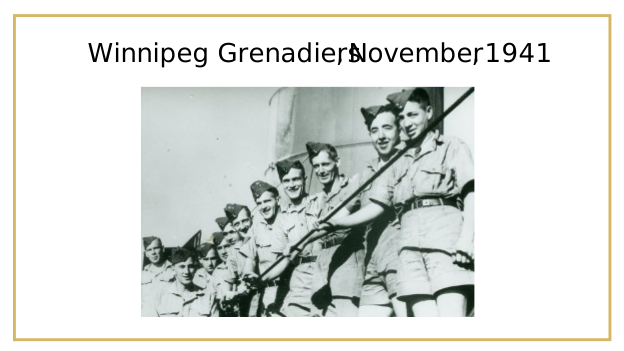
In October 1941, Britain asked Canada to help reinforce the British colony of Hong Kong against a possible Japanese attack, even though Winston Churchill had said that spring that there was “not the slightest chance” of defending it. Canada sent the two regiments mentioned earlier, and a headquarters unit—troops with little training or battle readiness, while stronger units were reserved for Europe. In mid-November, 1,976 Canadian soldiers, including two nurses, arrived in Hong Kong to join other Allied troops. Here’s a photo of some of the Grenadiers excited to begin their adventure.
Less than three weeks after the Canadians arrived and while they were still training, Japan attacked Hong Kong on the same day as Pearl Harbour. 30,000 battle-hardened Japanese soldiers against 14,000 Allied troops, many inexperienced. The Canadians lacked their army vehicles, some ammunition, and other supplies because their supply ship was diverted to the Philippines after the surprise attack. With no air cover or battleships and trapped on an island, the Allies fought fiercely for 17 days. Canada lost 290 soldiers and 493 were wounded—one of its highest WWII casualty rates. Hong Kong surrendered on Christmas Day 1941. These regiments were Canada’s first WWII troops in land combat, yet they would be the last to return home. The fighting was over, but the worst was yet to come.
The survivors then became prisoners of war of Japan, battling to live from Christmas Day 1941 until August 15, 1945. For nearly four years, they endured crowded, filthy, vermin-infested camps; starvation, beatings, disease, little to no medical care, and 10- to 12-hour days of back breaking forced labour on no more than 800 calories a day, mostly from rice. Many lost half their body weight, and many could barely walk. In Hong Kong, they built an airstrip at Kai Tak Airport—“we moved a mountain with pickaxes and shovels,” my dad said. In Japan, they were slave labour in factories, shipyards, and coal mines. They also faced dehumanization, beatings, torture, and threats of execution. In 1943 and 1944, three groups of Canadians were sent to work camps in Japan aboard “hellships,” packed into poorly ventilated cargo holds with little food, water, or sanitation. They were loaded onto platforms made of wooden slats, built one above the other in the holds of the ship. They could neither sit nor stand comfortably. With most suffering from dysentery, they lay in excrement and vomit. My dad was on one of these ships for almost a month. In the forced labour camps in Japan, they grew weaker and sicker and another 267 died in captivity.
Japan surrendered after the atomic bombings in August 1945. Evidence shows that an invasion of Japan would have led to the execution of all PoWs. Doctors examining the released prisoners believed few, if any, would have survived another winter in the camps. Of the 131 Indigenous soldiers, 49 did not return to Canada.
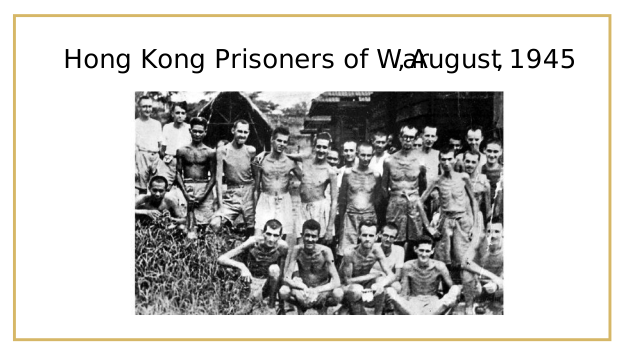
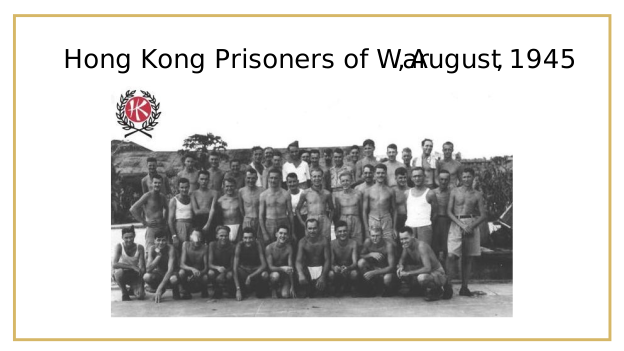
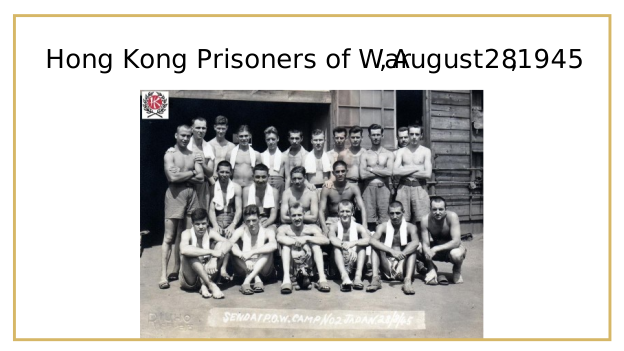
Those who came home were forever deeply scarred – some physically, all psychologically –severe PTSD. It wasn’t only the veterans affected- families and friends suffer the effects too. Some died relatively soon after their return, and some lived for many years. Their final resting places are scattered across Canada, with many of the Hong Kong veterans buried in Brookside Cemetery, including the 14 Indigenous veterans mentioned earlier.
The following is from the Teachers Resource Guide on the Association’s website: “Despite being marginalized in Canadian society, Indigenous men and women willingly enlisted to fight for Canada in World War II (WW2).”
And also from the Guide: "Indigenous peoples were largely considered inferior by mainstream Canadian society, with systemic and entrenched racial discrimination. These attitudes influenced policies that sustained poverty, poor health, and limited educational opportunities in Indigenous communities.”
Now given the conditions in the camps the PoWs lived in for those almost four years, think of what they came home with. In addition to the aftermath of injuries received, they had many health conditions and/or diseases. Severe malnutrition resulted in body sores that wouldn’t heal, vision impairment – even blindness - gastrointestinal issues such as ulcers, nerve damage to the limbs. They had intestinal worms, fleas, lice, scabies. They survived typhoid, chronic infections, recurring bouts of dysentery, a diphtheria epidemic, medical experiments. They had diseases that doctors here weren’t familiar with – pellagra, beri-beri, malaria. Living conditions in the camps brought out latent diseases such as tuberculosis, and exacerbated other pre-existing health conditions.
Were the Indigenous PoWs more susceptible to some diseases due to living conditions before joining the army? Were some of them “tougher” because of their way of life before the war? My dad left school at 14 and had been working at manual labour until he joined up at 19. Did he fare differently than a soldier who left university or a desk job to sign up?
Many Indigenous veterans lived in remote areas without nearby medical services or professionals familiar with their ailments. Because the Canadian government paid less for First Nations treatment, did they receive poorer care than other veterans?
Many struggled to learn about veterans’ services, including pensions, because government offices were distant and First Nations veterans, unlike others, were barred from Legions where such information was available.
While non-indigenous veterans received farmland and benefits, Indigenous veterans were often excluded from these programs. For some First Nations people, they had to give up their treaty status to obtain access to pensions and benefits. Many, many things changed for them.
Accessing programs that provided financial support was challenging as many lacked the necessary skills and/or documentation to apply. Veterans were entitled to education benefits such as post secondary schooling but many Indigenous veterans, like my father, were excluded from this as systemic barriers and institutional racism prevented them from obtaining the necessary pre-requisites for post secondary education.
How did these challenges to accessing services affect the Indigenous veterans and their families? All of this on top of their health issues.
In addition, the Hong Kong Veterans as a whole had what became known as their third battle. The battle for recognition, benefits and pensions. Until 1971, the Canadian government forced veterans to prove their specific health issue was directly caused by their time as PoWs – this was nearly impossible due to the complexities of their trauma and illnesses. In 1971, after exhaustive studies, the term “avitaminosis” was adopted as an umbrella diagnosis by the Department of Veterans Affairs to encompass the multitude of health conditions the veterans had. A guaranteed pension of 50%, still below the poverty line, was granted to the surviving Hong Kong Veterans. Supplementary pensions were available on an individual basis but still with that burden of proof.
The veterans themselves had long been fighting for adequate pensions and compensations. In the 1970s they were joined by The Royal Canadian Legion and the War Amps. The War Amps commissioned a report from Dr. Gustave Gingras, a well known specialist in physical medicine and former director of the Montreal Rehabilitation Institute. His research resulted in a 250 page report that identified pre-aging and some 19 other medical conditions not found among Canadian men of the same age group as the PoWs. It was hard to describe the full extent of their disabilities, both physical and mental. He concluded that Hong Kong Veterans were aging faster and dying sooner than their contemporaries.
After much lobbying, finally, on December 11, 1998 – remember the war was over in 1945 - Canada awarded each surviving Hong Kong veteran or their widow, the sum of $24,000 in compensation for the years spent in the PoW camps. . In 2001, all surviving Hong Kong Veterans were awarded a 100% pension – 56 years after they came home and after decades spent fighting for it.
As for recognition, they did not return to their home country as heroes. Moreover, people didn’t believe what they said they had experienced. Much of it was too horrific to comprehend. This too, affected the veterans in many ways. The Canadian government had awarded special bars for veterans of other battles to be added to their medals but did not have one for the veterans of the Battle of Hong Kong, despite their unique circumstances. It wasn’t until April 28, 1994 that each surviving Hong Kong veteran received the Hong Kong Bar, recognizing their participation in the battle that took place in 1941.
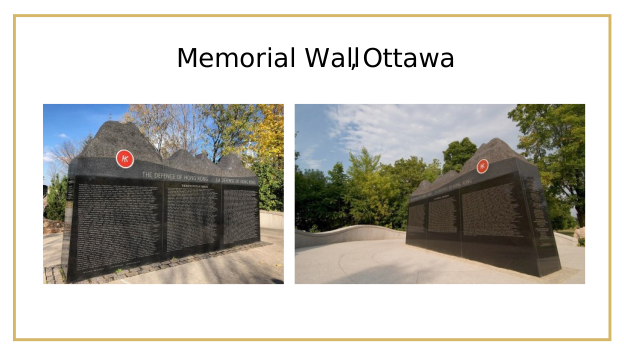
There’s a Memorial Wall in Ottawa that bears the name of every soldier, the two nurses, and the mascot dog, that took part in the Battle of Hong Kong. The government didn’t build it – the veterans and their families did. Fundraising, donating money, and acting as general contractors for its design and construction. It was unveiled in 2009, when some of the veterans were still alive.
My dad spent his last 5 years at Deer Lodge Centre, in a personal care home setting that was specifically for veterans. He passed on in 2008, a few months before his 88th birthday. Many of the staff had worked there for a long time. They were all in awe regarding the stamina and tenacity of the Hong Kong veterans that had reached advanced ages, despite their health conditions.
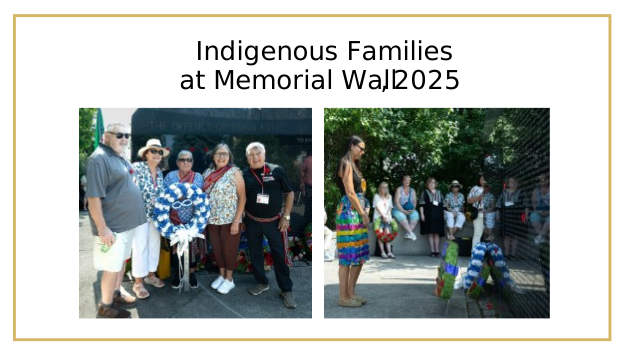
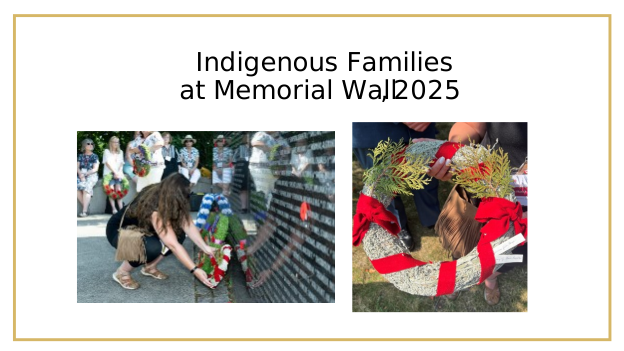
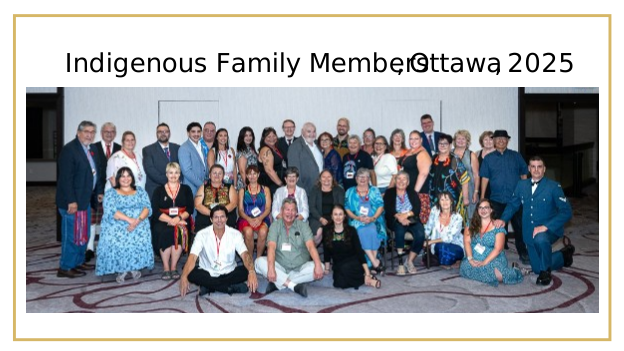
Since launching its research to identify Indigenous soldiers sent to Hong Kong, the HKVCA has worked to include their families in events and programs. In August 2025, it held a three-day Ottawa event marking the 80th anniversary of the Pacific war’s end. Funding from the Metis Veterans Legacy Program helped many Metis relatives attend. Of 200 participants, one quarter were Indigenous. This was the first commemorative event to formally recognize the Indigenous veterans and gave many families their first opportunity to join the ceremonies and honour their veteran at the Memorial Wall.
Did the Indigenous members of “C” Force, as the regiments were collectively called, have different health experiences or outcomes to their non-Indigenous counterparts?
There are many Indigenous veterans from various wars buried at Brookside Cemetery. As all veterans do, they each have their own story. What I have told you today touches on the lives of those 14 Indigenous Hong Kong Veterans who rest there. I hope by sharing the story it has created awareness of and appreciation for them. For all Hong Kong Veterans.
And, to end this where it started for me ... my dad.